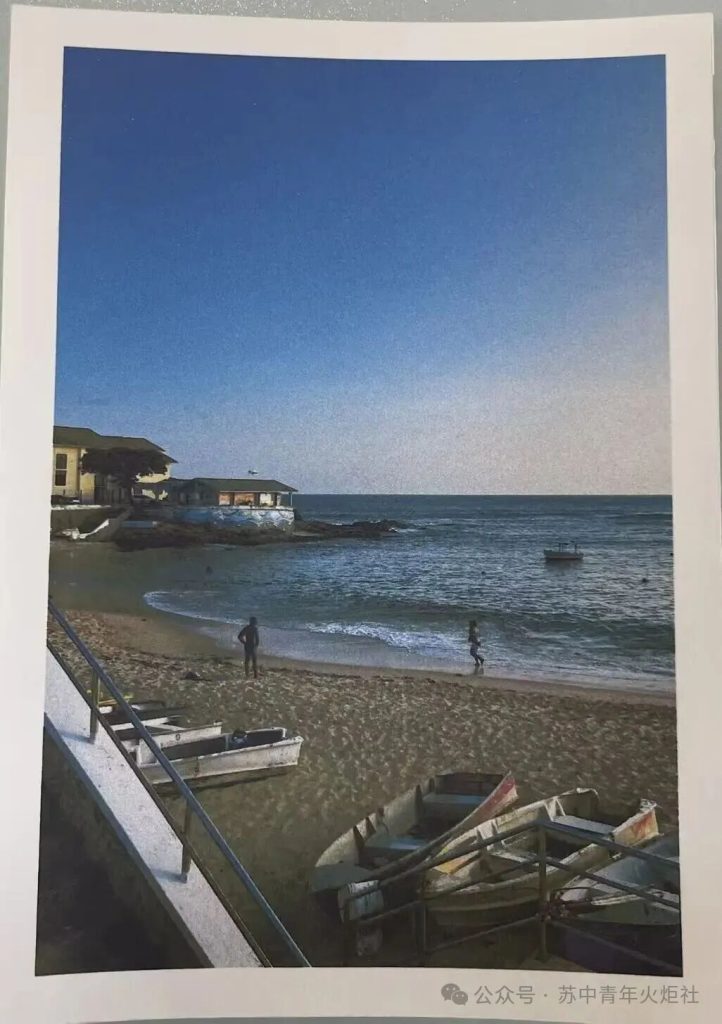
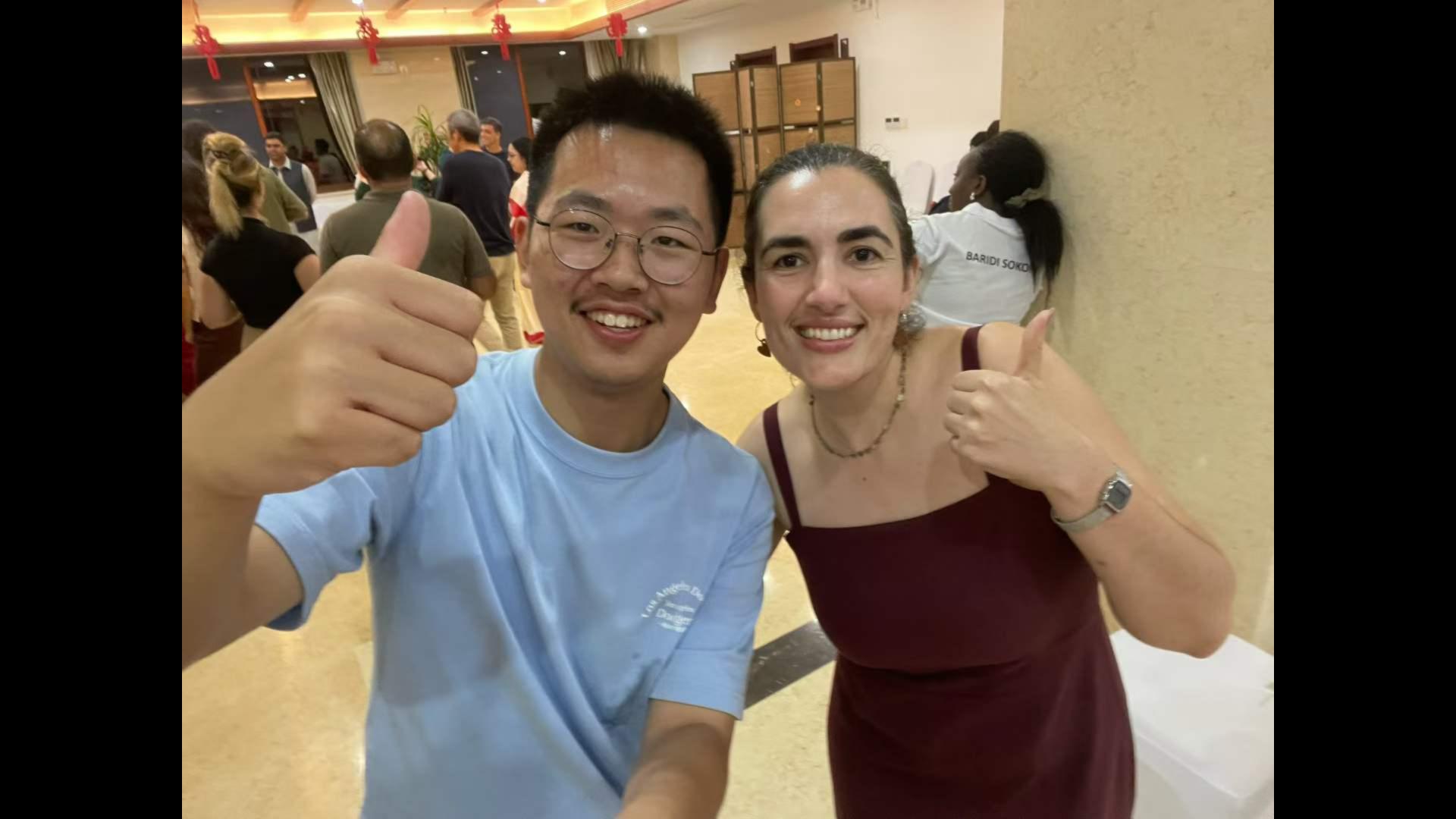
Brazil, a country with 210 million people, the fifth largest land area in the world, and six climate zones and biomes, seems magical to me. The photos they shared show its truly beautiful natural environment. In recent years, the global climate challenge has become more severe, and Brazil is trying to find new solutions to replace traditional soil burial methods. Under the South-South Cooperation framework, cooperation between China and Brazil has increased significantly in recent years. On the day before my study tour ended, I was delighted to have a very interesting conversation with Mariana, a Brazilian Ministry of Agriculture official who was studying Chinese agricultural technology in Suzhou. I wanted to take this opportunity to hear her thoughts on Sino-Brazilian agricultural cooperation and its future.
Regarding Brazil’s ecological governance, in the past, we often marveled at the richness of the Latin American rainforest, but rarely truly understood the costs that modernization had brought. Mariana told me that Brazil’s unparalleled biodiversity is both a treasure and a heavy responsibility. In the past, rapid development led to deforestation due to agricultural expansion and greenhouse gas emissions from large-scale livestock farming, leaving scars on this land. She mentioned the frequent floods and landslides she’d witnessed in Brazil in recent years, which deeply resonated with me. The costs of industrialization and climate change know no borders. This made me realize that both China and Brazil have followed a path of “pollute first, clean up later” or “development accompanied by growing pains.” How to safeguard the environment while promoting economic growth is a common and unavoidable question facing all of humanity.
What are some valuable lessons from China’s ecological management? Mariana came to learn about composting technology. Although similar attempts exist in Brazil, China’s technology in the field of refined and efficient organic waste treatment still showed her the possibility of using new technologies to replace traditional landfill methods. But what impressed and filled me with pride was her institutional perspective as a government official. More than pure technology, she admired China’s strategic resolve in promoting “green development.” She marveled at the Chinese government’s ability to formulate grand long-term plans and the resolute implementation of these plans by the entire society. The underlying logic of green transformation is: technology is merely a tool; institutional foresight and execution are the levers. As our generation has personally experienced, the smog and pollution of ten years ago have long since transformed into lush green mountains and clear waters under the firm strategy of “green development” and “ecological civilization.” This export of Chinese experience is not merely about providing a few sets of equipment, but about exporting a wisdom of governance that promotes harmonious coexistence between humanity and nature.
What changes will you seek upon returning to Brazil? When discussing her specific plans after returning home, Mariana didn’t resort to empty slogans but demonstrated a down-to-earth spirit. She told me, “I’m just one person, but I hope to work with my team, starting with small things, to change the fate of those family farmers.” I saw the consistency in the underlying logic of agriculture between China and Brazil. China’s rural revitalization supports small farmers, while Brazil’s agricultural sector is also committed to helping family farmers increase output and income. The true value of agricultural technology is never just data in the laboratory, but whether it can translate into real money in farmers’ pockets, leading to a more dignified life for them.
Thank you, Mariana. I sincerely hope that Brazil can protect its magnificent environment while developing its economy, and that China-Brazil cooperation will steadily advance!
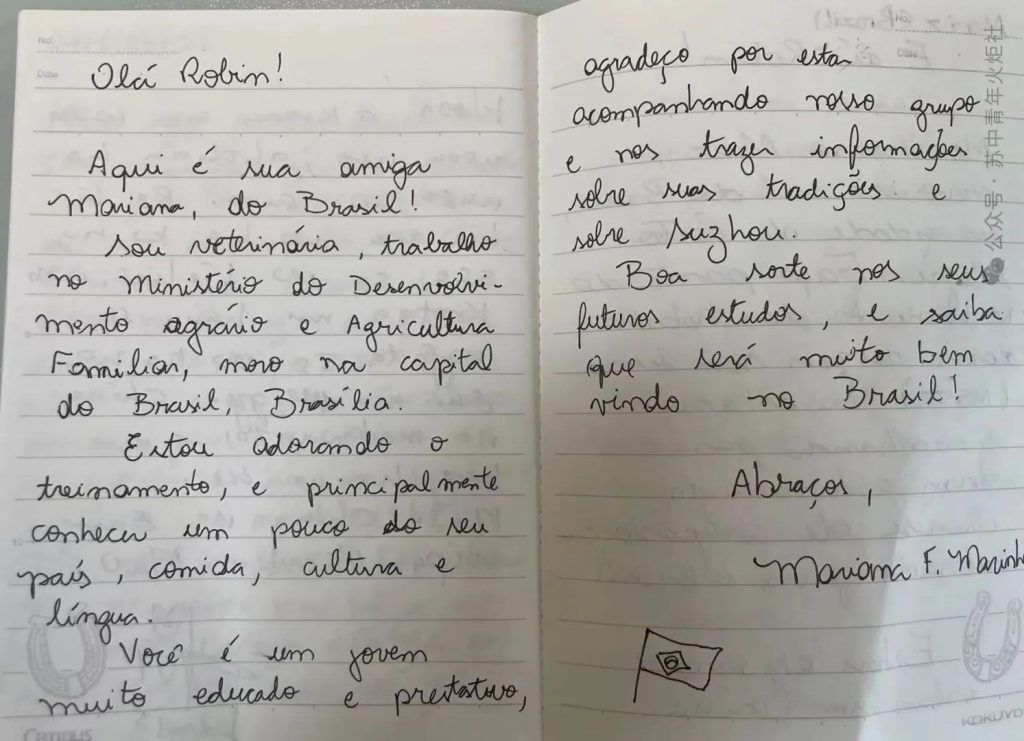
Hello Robin! I’m your Brazilian friend Mariana! I’m a veterinarian working at the Ministry of Agrarian Development and Family Agriculture, and I live in Brasilia, the capital of Brazil. I really enjoyed this training, especially learning about your country’s food, culture, and language. You’re a very polite and helpful young man, and thank you for accompanying our team and introducing us to your traditions and information about Suzhou. I wish you all the best in your future studies, and please remember that Brazil always welcomes you!
Hugs, Mariana F. Marinho

Hi Robin! It’s great to meet you! You introduced us to your culture and city! This photo was taken in Salvador, a city in Brazil. Hope you can visit your friends in Brazil someday.
Hugs, your friend Mariana Suzhou, June 28, 2026