
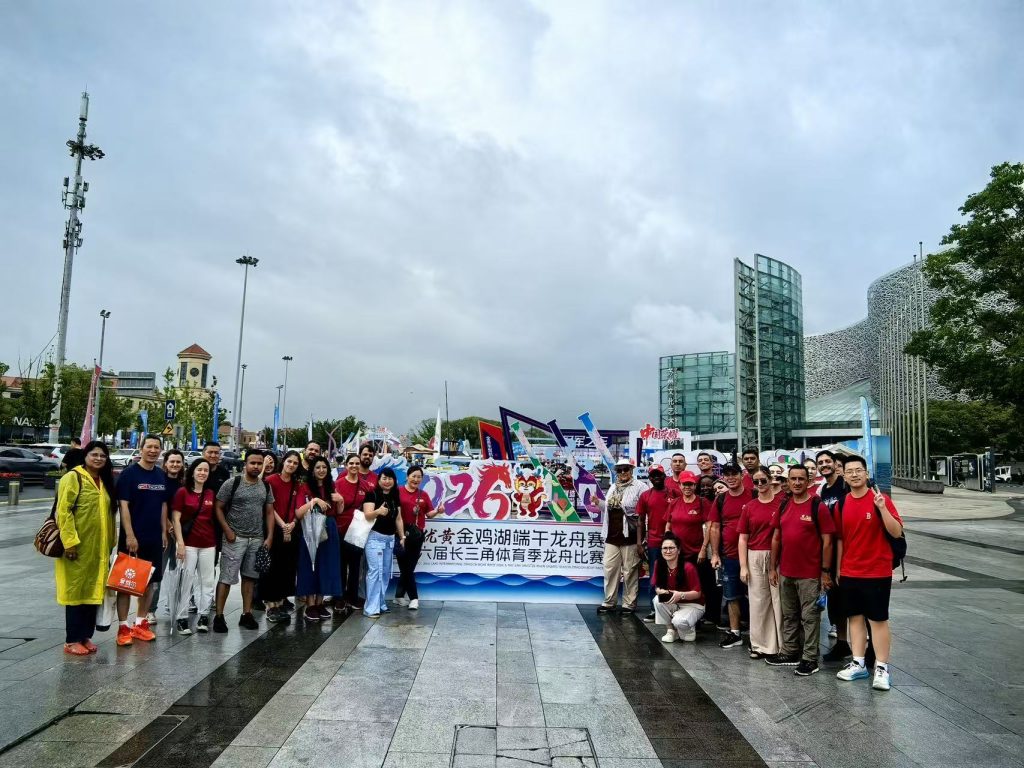
It was June 20th, during the Dragon Boat Festival holiday. As a volunteer, I was accompanying dozens of foreign scholars participating in a long-term field project in Suzhou. The morning schedule was to watch the dragon boat races and explore the market by Jinji Lake. By the time the bus pulled to a stop, the weather had already grown hot. Drums were thundering across the lake, and the shore was bustling with crowds. My friends got off the bus in groups of twos and threes, laughing as they surged toward the lakeside. I thought everything looked perfect.
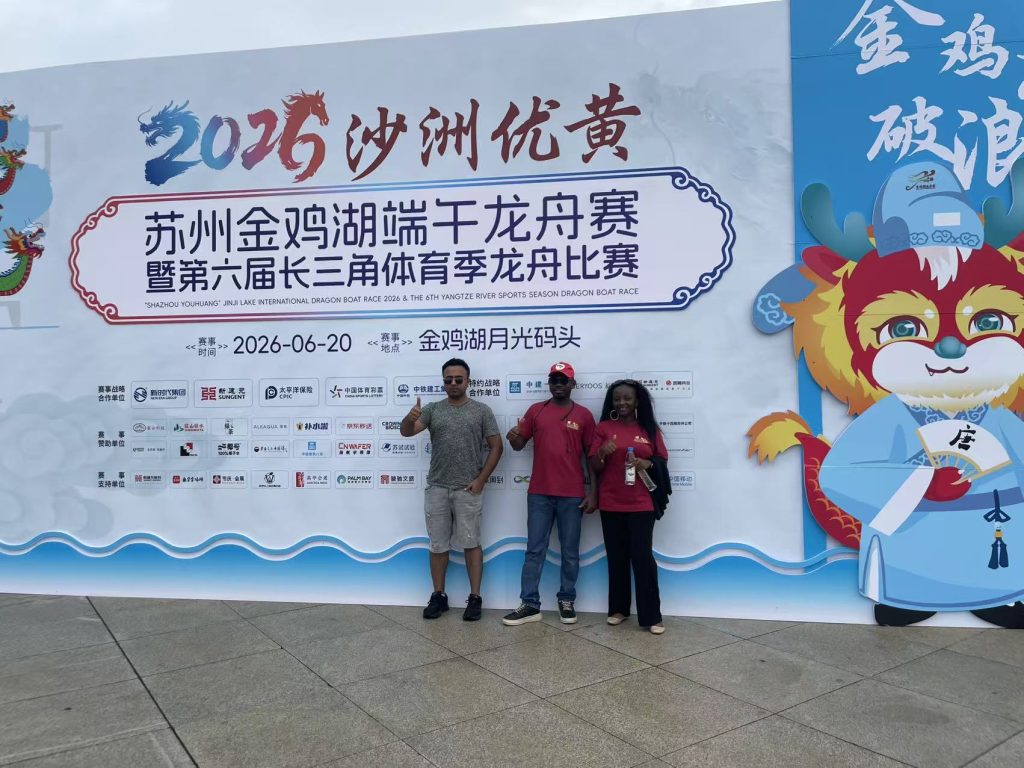
But I failed to notice that someone had been left behind.
Rania, an Egyptian woman, had no Chinese Yuan (RMB) on her, and her phone couldn’t connect to the internet, leaving her unable to contact anyone. She got off the bus and walked through the lively crowd all by herself, not knowing where to go or what to do. At that time, I was chatting inside the exhibition hall with two African friends—Lewis from Ghana and Evelyn from Tanzania—completely unaware of her situation. Later, Rania found another scholar from Dubai, and they wanted to go see the Gate to the Orient together. Not long after, however, I saw her walking back alone. Her pace was very slow, and her face was blank. I glanced from a distance but didn’t think much of it, assuming she was just tired.
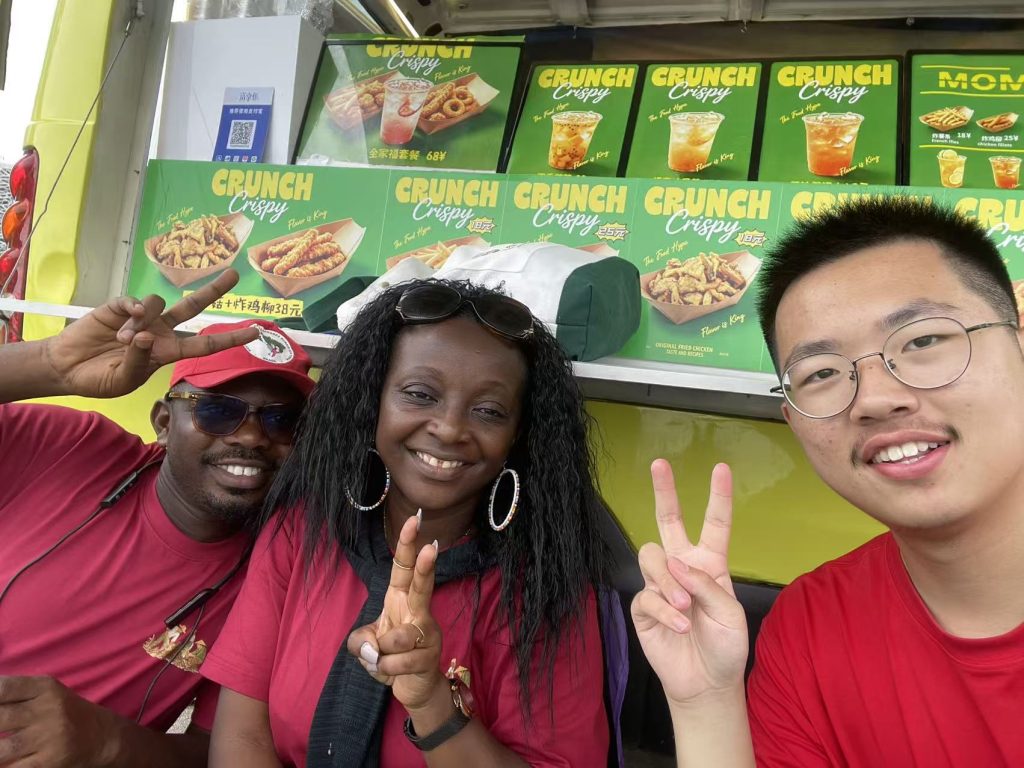
It wasn’t until the driver called me, saying that a friend was crying on the bus and that even buying her a sausage hadn’t helped, that I dropped my phone and ran back.
When I pulled open the bus door, she was sitting by the window, her shoulders trembling, tears streaming down her face. I sat down next to her, not knowing how to start the conversation, so I just gently told her that I was also very sad about what she was going through. She shook her head, unable to utter a single word. I ran to buy a cup of lemon juice, came back, and handed it to her, asking her to take a sip first. Her fingers were ice-cold when she took it. My heart ached at that moment. It was only later that she told me she was crying out of loneliness: in this unfamiliar country, at a time when everyone else was busy enjoying the festival, she couldn’t find a single person to talk to.
While comforting her, I contacted the professor and also called Lewis and Evelyn over. Gradually, she calmed down a bit. When the bus was about to leave at noon, I proactively sat next to her, thinking that perhaps we could chat about something else to distract her.
Since I had always been quite interested in Arabic, I casually asked if she could teach me a few letters. She paused for a moment, then smiled. During that bus ride of over an hour, she genuinely taught me from the absolute basics—how Arabic is written from right to left, how the length of a letter stretches with the extension of its pronunciation, and how some sounds require the tip of the tongue to press against the roof of the mouth while air squeezes out from both sides. I tried a few times but couldn’t make the sound. She looked at me and said, “Once you truly understand the meaning of those words, you will be able to make the sound.” She asked me to call her “nainai,” saying it was a nickname used among friends.
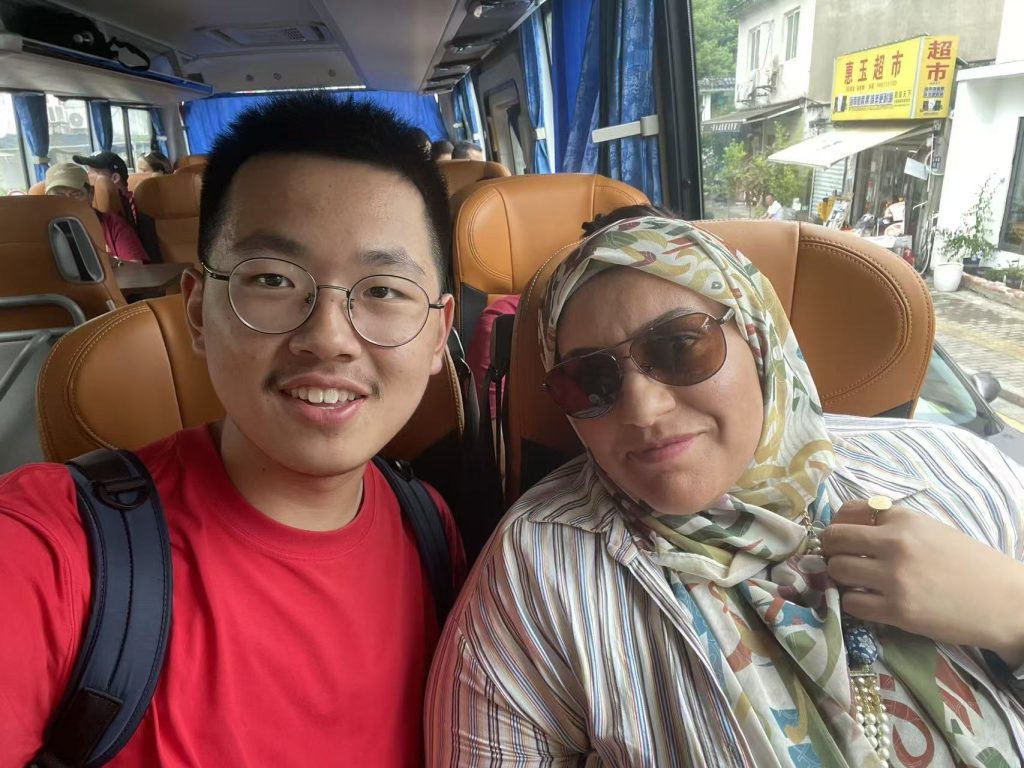
Upon arriving near Pingjiang Road, the first thing I did after getting off the bus was to help her and another Egyptian lady, Hamida, find a bank to exchange RMB. The three of us walked in the scorching sun for nearly forty minutes before finally finding the nearest Industrial and Commercial Bank of China (ICBC). However, because it was a holiday, the main doors were tightly shut. Refusing to give up, we saw an ATM next to it and thought of it as our last straw. The three of us squeezed into that tiny booth of less than one square meter, taking turns to operate the machine, dripping with sweat. Yet, we just couldn’t find a currency conversion button on the screen.
Standing in front of that machine, looking at the disappointed expressions of my two Egyptian friends, I felt terribly uncomfortable. They didn’t want to trouble anyone for anything; even their disappointment was quiet. But I told them we couldn’t just leave it at that—if we walked a bit further, there would definitely be a way.
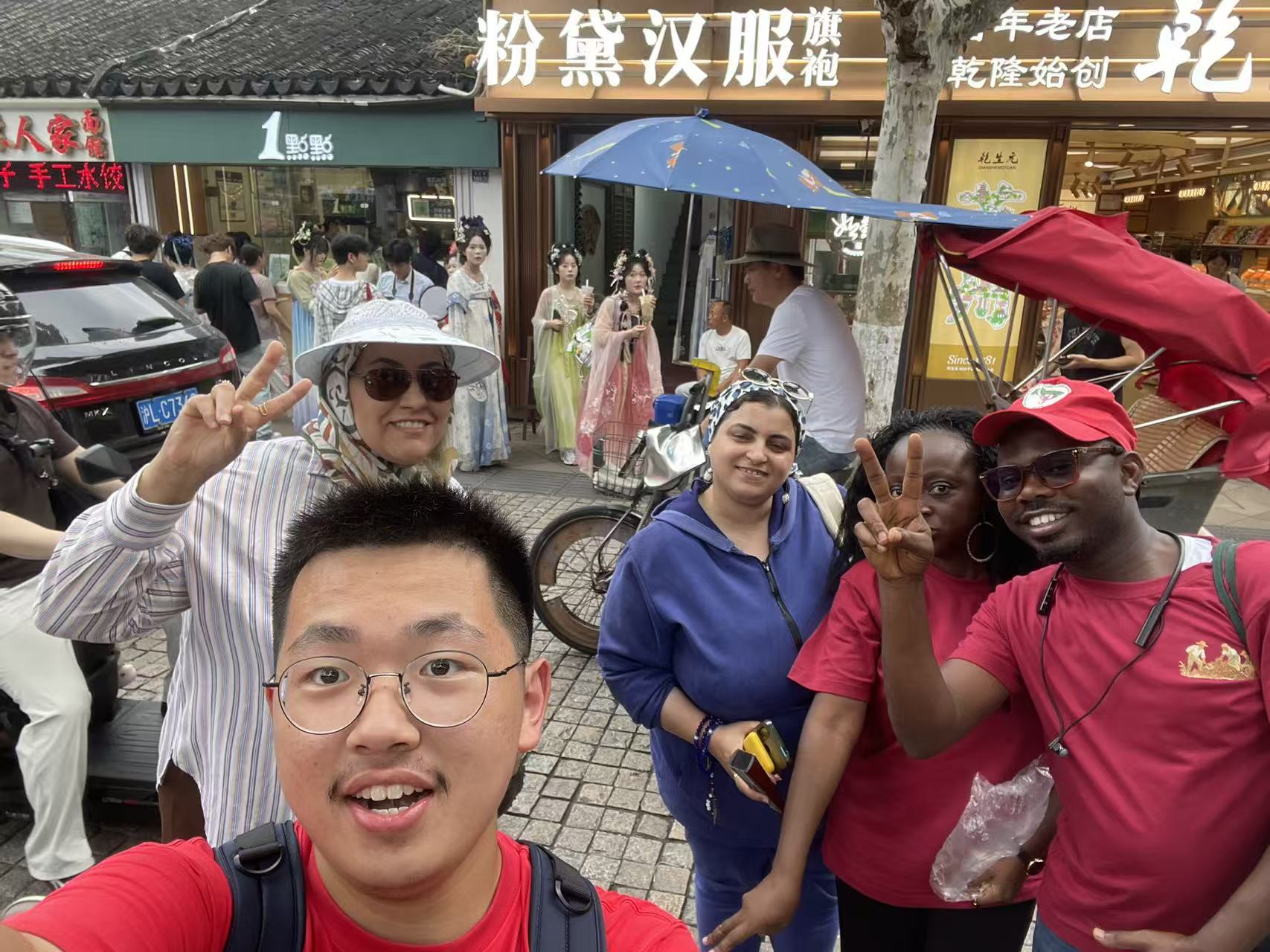
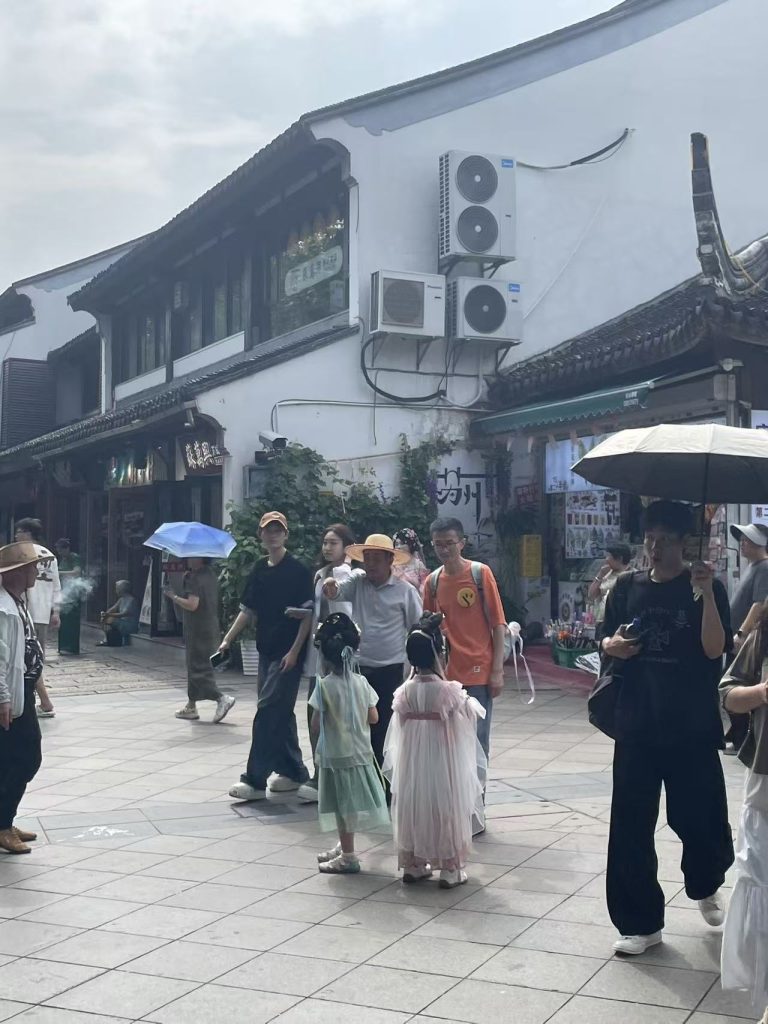
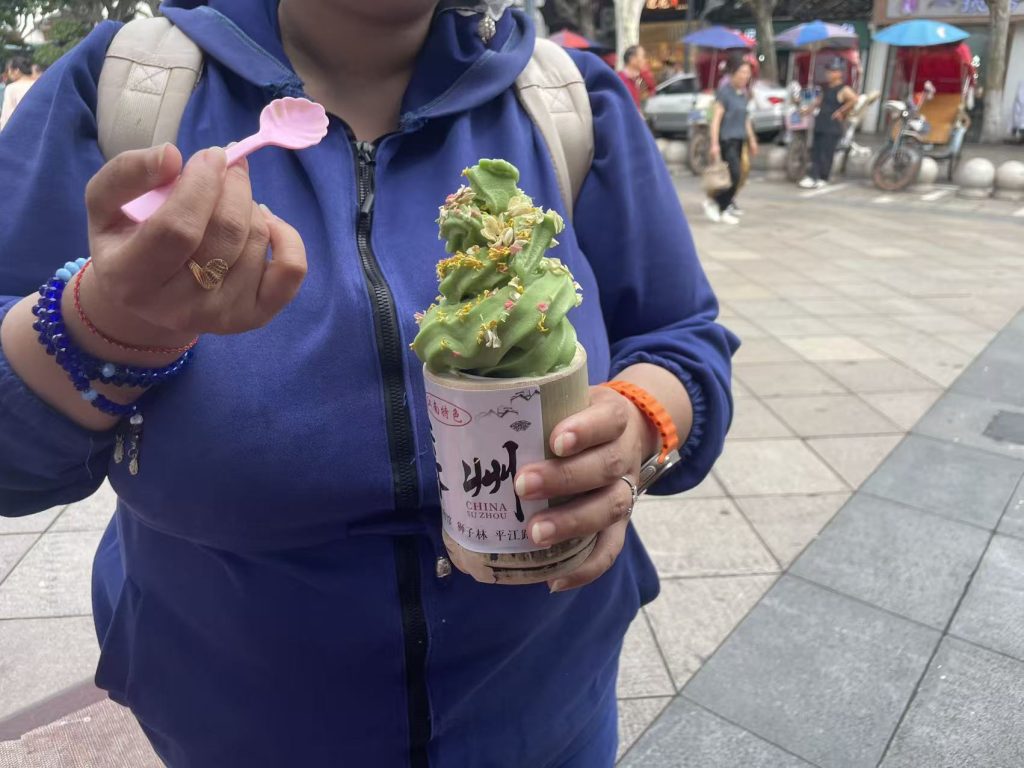
Just then, Lewis and Evelyn called, saying they wanted to join us. The five of us met up by the side of Pingjiang Road. Along both sides of the flagstone path stood old houses with white walls and black tiles. There were small bridges over flowing water, and willow branches hung down, swaying gently in the breeze. Rania and Hamida found everything novel, yet they couldn’t buy anything—because they had no RMB. Seeing the restraint in their eyes, I quietly bought some snacks and drinks to share with everyone, pretending it was just for “everyone to have a taste together.”
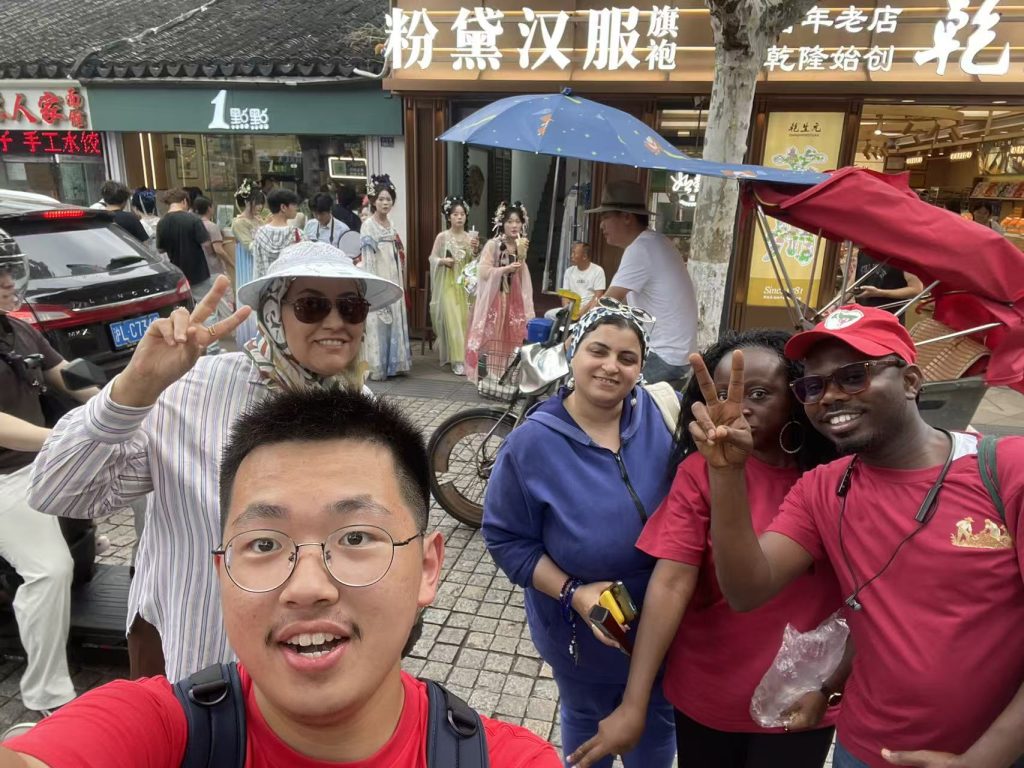
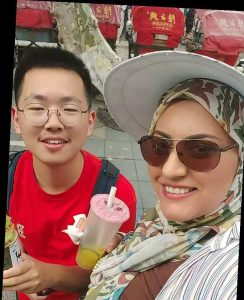
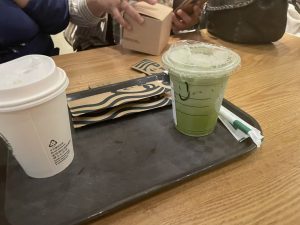
Later, we found a Starbucks with a sign at the door saying they accepted credit cards. Rania’s eyes lit up, and she said she could treat us to coffee. We went inside, ordered, and sat down. While I was drinking, I noticed that Lewis and Evelyn were gone. I thought they had gone to browse elsewhere, so I didn’t think much of it. It was only when we finished and went outside that we found the two of them had been standing outside the door, leaning against the wall, waiting for a full hour.
I asked them why they didn’t come inside. Lewis smiled and waved his hand, “It’s enough that she treated you guys. We know things aren’t easy for her.” Evelyn nodded beside him. At that moment, standing on Pingjiang Road, I was deeply moved. They clearly wanted a cup of iced coffee too, yet they chose to stand outside just so Rania wouldn’t have to spend extra money.
Lewis stepped forward and gave me a hug, then hugged Evelyn, not letting go for a long time.
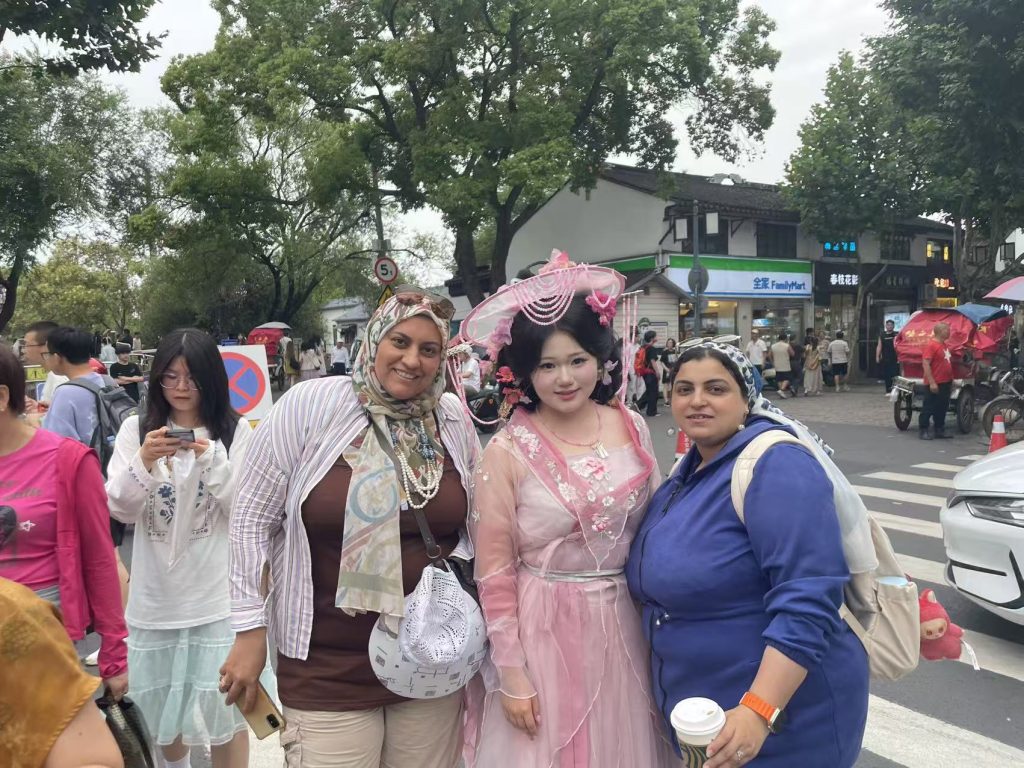
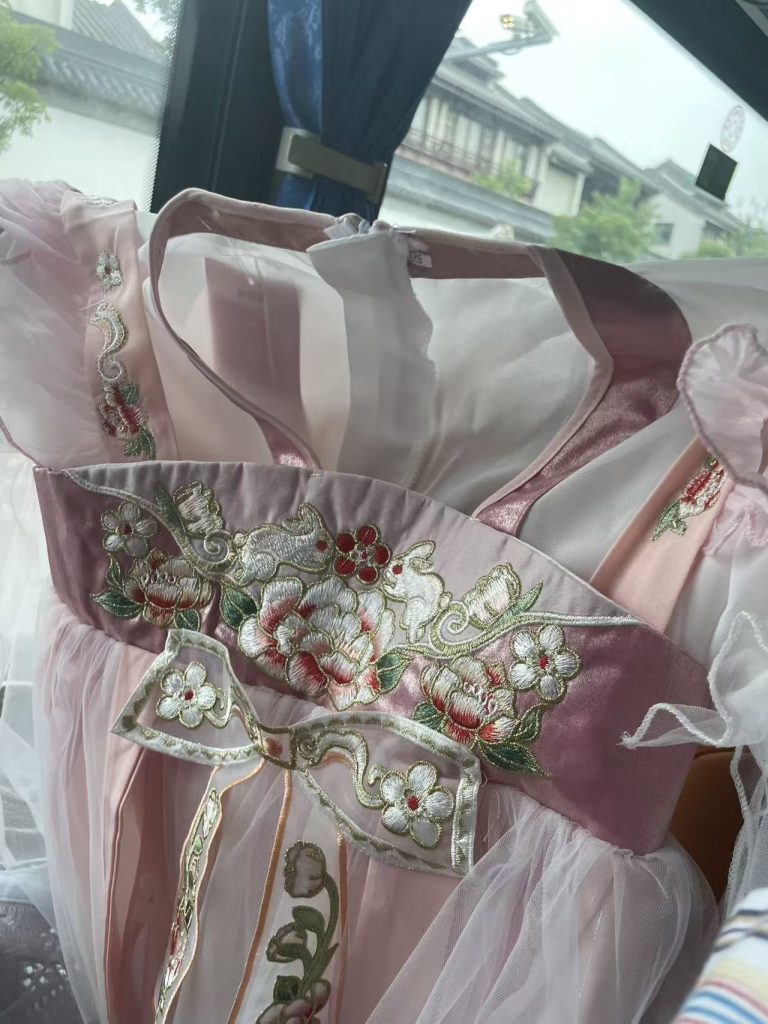
The afternoon sun gradually dipped, but Pingjiang Road was still crowded. Rania pulled me aside and said her daughter loved Chinese culture and that she wanted to buy a Hanfu to take back to her. I accompanied her to search all along the street. Most shops only rented them out instead of selling them. After walking a very long way, we finally found a small shop that sold Hanfu. She spent a long time picking one out, repeatedly feeling the fabric with her hands and comparing colors, finally choosing a pale pink one. I helped her complete the payment. Holding the garment in her arms, she said, “My daughter will be so happy.” In that split second, I suddenly felt that no matter where you come from, a mother’s love for her child requires no translation.
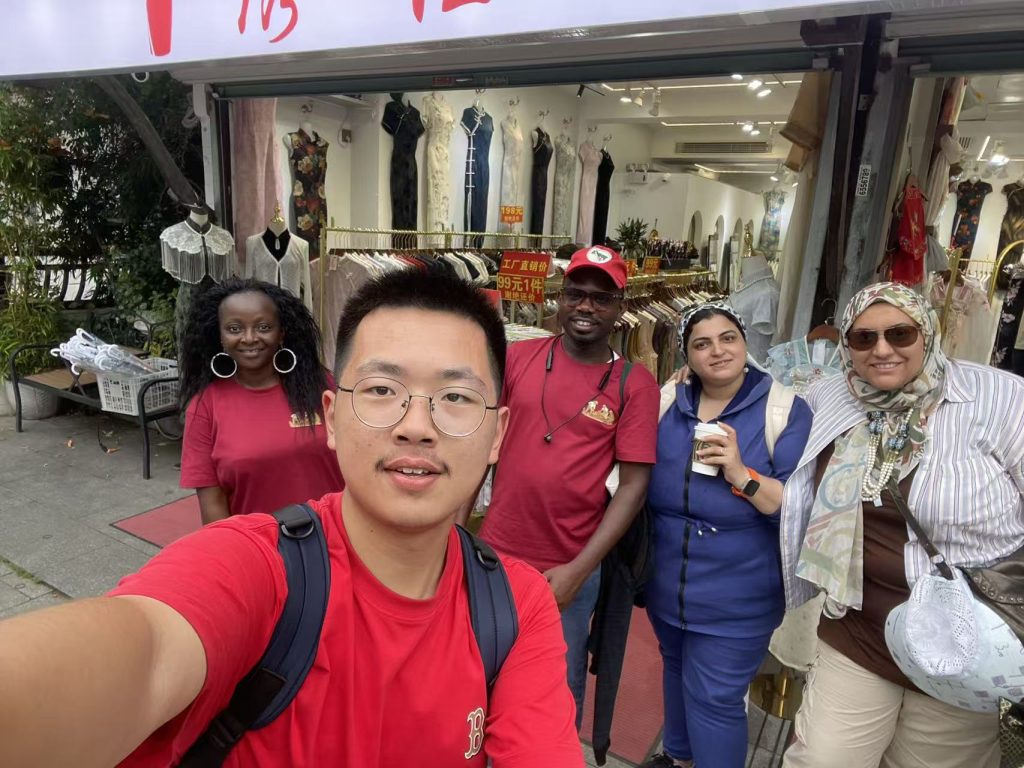
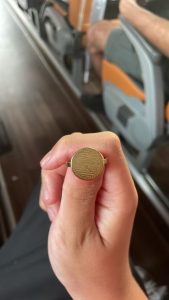
On the return bus, I had to get off early due to my duties as a volunteer. Just as I stood up to leave, Rania suddenly pulled my hand, slipped off the ring she had been wearing on her finger, and pressed it into my palm. I looked down; it was a golden ring engraved with the pattern of an eye. From the front row, Hamida also turned around and handed me a 20 Egyptian Pound banknote, printed with ancient Egyptian architecture and patterns.
Suddenly, the whole bus started clapping. Some people whistled, and others shouted my name. Standing in the aisle, my palm trembled slightly, and for a moment, I was completely speechless.
It wasn’t until I got home that I learned the pattern on the ring was the Eye of Horus, which symbolizes blessing, protection, and health in Egyptian culture. Before getting off the bus, Rania had held my hand tightly and said, “You made my day.” She said she had originally felt very lonely, but now it was different. She talked about missing her daughter and how, meeting a stranger in a foreign land, she had felt a warmth just like home.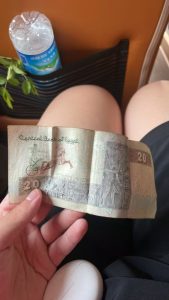
I recalled interviewing Lewis and Evelyn that morning, when they mentioned that African people place great value on “common interest.” At the time, I had just nodded and written it down in my notebook. It wasn’t until the end of that day that I truly understood: common interest wasn’t about shared benefits, but a shared situation. It means knowing that someone else is having a hard time, and thus choosing to stand outside the door; it means knowing you cannot help, and thus choosing not to add to the trouble; it means that even across language and culture, you can understand each other in silence.
Standing in the Suzhou subway station on a summer evening, clutching a ring and a banknote in my hand as the wind blew past, I still hadn’t fully processed it all. Later, walking slowly back home, I kept thinking that the deepest kindness between human beings is often silent. It is about not putting you in a difficult position, quietly standing outside the door, and taking off a ring worn for a long time to press it into your hand.
I didn’t do anything extraordinary that day. I just walked with a few people, helped them find their way, bought a few things, and chatted. Yet they all made me feel as though I had become part of a significant moment.
And that is a moment I will remember for a very long time.
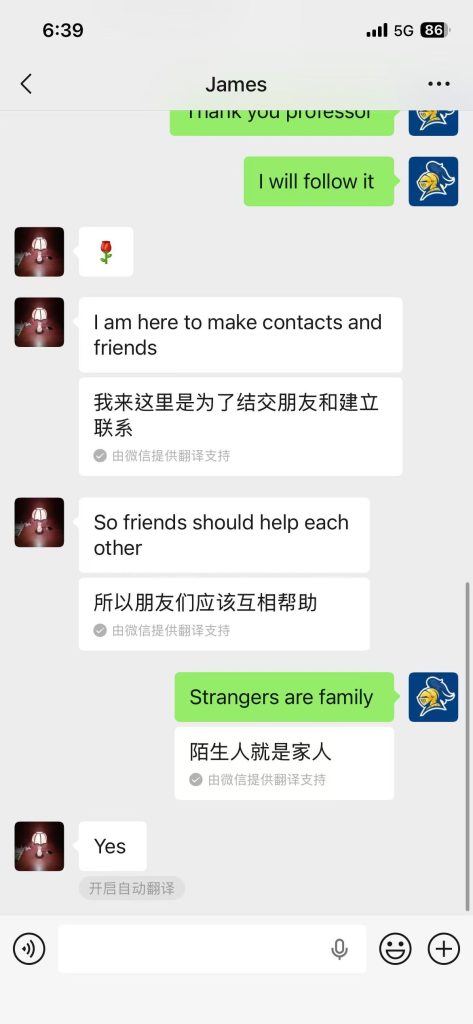
I keep thinking back to what James said to me that morning: “Strangers are just family.” When we help others, the world has a way of giving back to us in return.