
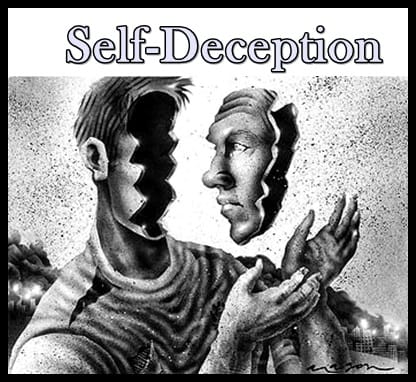
The Many Faces of Self-Deceit: Psychological Mechanisms and Social Implications
Research essay by Robin Zhu, copyright reserved, 2026. Note that any copy or misuse of this research essay without permission from the author is illegal and will be punished by laws.
Introduction
It is common to see habitual smokers believing smoking is harmless to their health.
Psychologists usually explain this mismatch between knowledge and reality as self-deceit.
Though it is rather a complicated concept in psychology, the most notable feature of self-
deceit is its fraudulence of people’s cognition or behavior to distort the truth. This essay aims
to define the concept of self-deceit through exploring different self-deceit phenomena.
Self-deception and Self-deceit
Psychologists define self-deception as a biased cognitive process in order to maintain the
false belief (Mei, D., et al., 2023). In the meantime, self-deceit involves a motivated
misrepresentation of one’s true-self (Mele, A. R., 2000). According to Trivers (2011), the
existence of self-deception is to better deceive others by first deceiving ourselves (Trivers, R.,
2011), which underscores the distortion of the truth. This reflects that self-deception, as a
psychological mechanism, can be classified as a type of self-deceit.
A prominent example of self-deception is a cancer patient expecting recovery even when
he already has malignancy. The patient knows unconsciously the disease is incurable but tries
to prevent that thought from becoming conscious (A. Greenwald., 1997). In this case, the
reason why the patient engages in self-deception is rooted in self-serving bias: he needs to
distort the truth by using this kind of embellished cognitive process in order to protect his
self-esteem, perceiving himself as positive so that he can maintain his adaptive value to
obtain potential benefit.
Cognitive bias and Self-deceit
Self-deceit not only influences people’s cognition of themselves, but also changes
people’s perception of other important matters. Self-deceit is also a cognitive distortion
shaped by biases like confirmation bias and framing effect. Confirmation bias refers to
information is encoded against the possibility of being rejected (Gottlieb, D., 2010). When
people have the confirmation bias, they usually have a greater first impression matter to a
subject, which causes them to ignore the latter information about the subject especially when
the information provided is contradicted with what we believe. Finally, their opinions are
mostly differentiated from the truth. This can be supported by an experiment by Eil & Rao in
2011, in which researchers displayed either the individual participant’s intelligence score &
appearance score or a random number. It was found that participants who received their
intelligence and appearance scores were more easily to remember positive aspects in their
appraisal but took no notice of negative information. However, they perceived the random
number objectively (Eil, D., & Rao, J. M, 2011). This demonstrates self-deceit is a selective
thinking process used to protect self-esteem by favoring information that aligns with one’s
initial self-view.
Moreover, self-deceit can be a biased interpretation of vague information, influenced by
how it is mentally framed to maintain a positive self-esteem. When options are presented
ambiguously, individuals often interpret them as “at least” cases, paving the way for stronger
framing biases (Chick, C. F. et al., 2016). It is demonstrated by the experiment of Sloman and
other researchers in an experiment where participants were divided into two separate groups:
one group was clearly told their grades after completing a dot-tracking task but the other was
told ambiguously. The result shows that when they got a bad grade, those who were told
ambiguously had a higher tendency to deceive themselves as being great in this task.
However, those who were told clearly unable to distort the explanation were less likely to
self-deceit (Sloman, S. A. et al., 2010). Individuals who receive unclear information are more
likely to form self-deceit because ambiguity facilitates the distortion of reality and provides
an opportunity for biased cognitive process to achieve desired false belief (Dongmei Mei, et
al., 2022).
The desire to perceive a sense of fulfillment narrows our sight given our first impression
and limited information, which can be also classified as a kind of self-deceit that steers our
cognition away from the truth. Nevertheless, it can still reduce our cognitive load and
enhance our social standing.
Self-enhancement and Self-deceit
Though involving misrepresentation of reality, self-deceit can be a mental strategy that
helps individuals adapt socially and emotionally through supporting self-confidence and
coping with stress. One of the common examples is the research of Fein and Spencer, non-
Jewish participants were told either that they did well or poorly on an IQ test, then they will
evaluate the Interview performance of a Jew and a Christian. When the participants got a low
score in their intellectual test, the researchers found that their evaluation towards the Jews
will tend to be lower than the Christian (Fein & Spencer,1997). Researchers claimed that all
self-evaluations are relative, the self can be elevated above others either via self-enhancement
or other derogation (Von Hippel, W., & Trivers, R. 2011). In this case, the participants
derogated the Jew to improve their self-esteem and ignored the effect of the low-score test,
enhancing themselves by discriminating ethnicity in order to deceive themselves into
thinking they are better than others in the absence of any evidence. This shows that self-
deceit can be an instinctive reaction where individuals unconsciously belittling others to
enhance oneself, often driven by underlying psychological motives.
Fixed mindset and Self-deceit
Self-deceit is not only a way of perceiving; it also affects thinking patterns and
personality. Mindset is also an important factor that aligns closely with self-deceit. People
who have fixed mindset, the belief that one’s abilities is unchangeable through efforts or
experience, are more prone to self-deceit than people with other mindsets (Niiya, Y. et al.,
2010).
Individuals with fixed mindset on intelligence frequently engage in self-handicapping
(Gál, É.et al. ,2023). Self-handicapping is a kind of self-deceit that involves creating or
claiming an obstacle prior to a performance in order to provide a viable excuse for possible
failure (Jones & Berglas, 1978). This can be demonstrated by the study of Niiya, Y. et al.
(2010), in their study, a group of undergraduate students who believe their intelligence is
unchangeable incline to do insufficient practice before the exam in order to prepare for the
potential failure (Niiya, Y. et al., 2010). These students demonstrate that people tend to
rationalize their unsatisfactory academic performance with self-deceit, specifically, lying to
themselves that they are cognitively limited. Therefore, people with fixed mindset acquiesce
to comforting beliefs and fail to address their problems; their brain is more concerned with
the coherence and efficiency of its narrative than how events truly unfold (Benjamin J. Cline,
2016).
Fixed mindset can also influence people’s way to maintain their self-image, often
leading them affirm their own abilities and keeping their positive self-perception. They
maintain their vanity by changing the way of expressing the result, usually deceiving
themselves first. Study shows that students who are evaluated as intelligent are more likely to
exaggerate their test scores than students who are considered to be diligent (Mueller, C. M., et
al., 1998). Their fixed mindset allows them to deceive themselves in order to hold false
beliefs that support a favorable self-view, especially in the context of showing their personal
skills and abilities. In this case, self-deceit involves actively misrepresentation of oneself to
maintain a desired false belief so they can better deceive others.
Self-deceit produced by the fixed mindset sustain people’s false beliefs, hindering
learning and potentially leading to maladaptive outcomes. Meanwhile, it allows them to
better disguise themselves, deceiving themselves so it can facilitate them to deceit others.
Imposter delusion and Self-deceit
In addition, self-deceit can also be caused by uncontrollable pathological factors and
evolutionary instincts which unconsciously affects individuals. The imposter delusion
typically refers to Capgras delusion, where a person perceives a close friend or the relative
has been replaced by an identical-appearance imposter (Alain Barrelle et al., 2017). In the
study of Capgras and Reboul-Lachaux, who did an experiment about the disease of Capgras’
Syndrome, researchers observed the perceptions and reactions of patients suffering from
Capgras’ syndrome when they met their relatives. These patients claimed that these close
people were replaced with identical impersonators (Capgras & Reboul-Lachaux,1923).
Imposter delusion is a type of self-deceit because the identical impersonators were actually
their family members but they failed to recognize. Later researchers hypothesized that
impostor delusion formed because the patients were devoid of a feeling of emotional arousal
that normal people are able to produce (Hirstein, W., 2005). In 2018, Lauria and other
researchers proposed a theory that self-deceit can stem from the unconsciousness of the
affective filter, a mechanism consists in the evaluation of information in light of one’s goals
(Lauria, F., & Preissmann, D., 2018). The malfunction of the affective filter which is
responsible for producing the emotional arousal makes it more unconscious to encode
information. In this case, self-deceit is the unconscious distortion of information due to
emotional interference.
Adopting Self-deceit Proactively
While self-deceit caused by diseases cannot be controlled by patients themselves,
healthy people can learn to avoid and adopt self-deceit through understanding the mechanism
and influence of self-deceit.
On the negative side, self-deceit distorts our perception of reality and reduces our self-
awareness, impairing capability of addressing reality problems. For example, people often
engage in the climate change denial, which is a kind of self-deceit that rejects the scientific
consensus on the existence of global warming (Bardon, A., 2019). A report indicates the
improper solutions to the climate eventually lead to the obstruction of scientific knowledge
and more social conflicts (Bardon, A., 2019). I champion that the public and the government
should raise their awareness of taking actions to protect environment instead of just deceiving
themselves by ignoring what is happening.
On the positive side, however, self-deceit can help reduce our cognitive load, helping us
perceive a sense of self-enhancement and gain social confidence, which then keeps us
adaptive in the competitive environment. For instance, some unemployed workers attribute
their unemployment to their own faults despite there are external factors. This type of self-
deceit can be beneficial as it helps people recover from the social setbacks and increase their
personal resilience, thus keeping them adaptive and look for a new job.
Conclusion
In conclusion, self-deceit is a psychological process shaped by psychological needs and
physiological diseases, through which individuals distort reality to protect self-worth and
adapt to pressure. Self-deceit may restore our courage to fight again, but under some major
events with impact, we should avoid self-deceit as the escapism and fraudulence of self-
deceit will finally lead to greater pressure and irreversible consequences. Therefore, I
champion that all citizens, communities and government should work together to steer people
away from self-deceit in major issues like environmental degradation through formulating
polities and promoting education on spreading the truth.
References
A. Greenwald. (1997). The Mythomanias: The Nature of Deception and Self-
Deception.https://www.semanticscholar.org/paper/32c4ffc11ac13b7a567fa36812d122
1723802c9a
Alain Barrelle & Jean-Pierre Luauté. (2017). Capgras Syndrome and Other Delusional
Misidentification Syndromes. In Monographs in Clinical Neuroscience / Frontiers of
Neurology and Neuroscience / Monographs in Neural Sciences.
https://doi.org/10.1159/000475680
Bardon, A. (2019). The Truth About Denial: Bias and Self-Deception in Science, Politics, and
Religion. Oxford University Press.
Benjamin J. Cline. (2016). A Psychological Account of the Formation of Self Deceptive
Beliefs.https://www.semanticscholar.org/paper/81953508ccedb542655b2b5ca718386
4c6e936c9
Chick, C. F., Reyna, V. F., & Corbin, J. C. (2016). Framing effects are robust to linguistic
disambiguation: A critical test of contemporary theory. Journal of Experimental
Psychology: Learning, Memory, and Cognition, 42(2), 238.
Delusion and Self-Deception. (2010). https://doi.org/10.4324/9780203838044
Dongmei Mei, Zijun Ke, Zhihao Li, Wenjian Zhang, Dingguo Gao, & Lijun Yin. (2022). Self‐
deception: Distorted metacognitive process in ambiguous contexts. Human Brain
Mapping. https://onlinelibrary.wiley.com/doi/10.1002/hbm.26116
Eil, D., & Rao, J. M. (2011). The good news-bad news effect: asymmetric processing of
objective information about yourself. American Economic Journal: Microeconomics,
3(2), 114–138.
Fein, S., & Spencer, S. J. (1997). Prejudice as self-image maintenance: Affirming the self
through derogating others. Journal of Personality and Social Psychology, 73(1), 31–
44.
Gál, É., Tóth-Király, I., Szamosközi, I., & Orosz, G. (2023). Fixed intelligence mindset
moderates the impact of adverse academic experiences on students’ self-esteem.
Journal of College Student Retention: Research, Theory & Practice, 24(4), 1028–
1053.
Gottlieb, D. (2010). Will you never learn? Self-deception and biases in information
processing. Unpublished Manuscript, Princeton University, 127–158.
Hirstein, W. (2005). Brain Fiction: Self-Deception and the Riddle of Confabulation. MIT
Press.
Jones, E. E., & Berglas, S. (1978). Control of attributions about the self through self-
handicapping strategies: The appeal of alcohol and the role of underachievement.
Personality and Social Psychology Bulletin, 4(2), 200–206.
Lauria, F., & Preissmann, D. (2018). What does emotion teach us about self-deception?
Affective neuroscience in support of non-intentionalism. Les ateliers de l’éthique,
13(2), 70–94.
Mei, D., Ke, Z., Li, Z., Zhang, W., Gao, D., & Yin, L. (2023). Self‐deception: Distorted
metacognitive process in ambiguous contexts. Human Brain Mapping, 44(3), 948–
969.
Mele, A. R. (2000). Self-Deception Unmasked. Princeton University Press.
Mueller, C. M., & Dweck, C. S. (1998). Praise for intelligence can undermine children’s
motivation and performance. Journal of Personality and Social Psychology, 75(1), 33.
Niiya, Y., Brook, A. T., & Crocker, J. (2010). Contingent self-worth and self-handicapping:
Do incremental theorists protect self-esteem?. Self and Identity, 9(3), 276–297.
Sloman, S. A., Fernbach, P. M., & Hagmayer, Y. (2010). Self-deception requires vagueness.
Cognition, 115(2), 268–281.
Trivers, R. (2011). The Folly of Fools: The Logic of Deceit and Self-Deception in Human
Life. Basic Books.
Von Hippel, W., & Trivers, R. (2011). The evolution and psychology of self-deception.
Behavioral and