
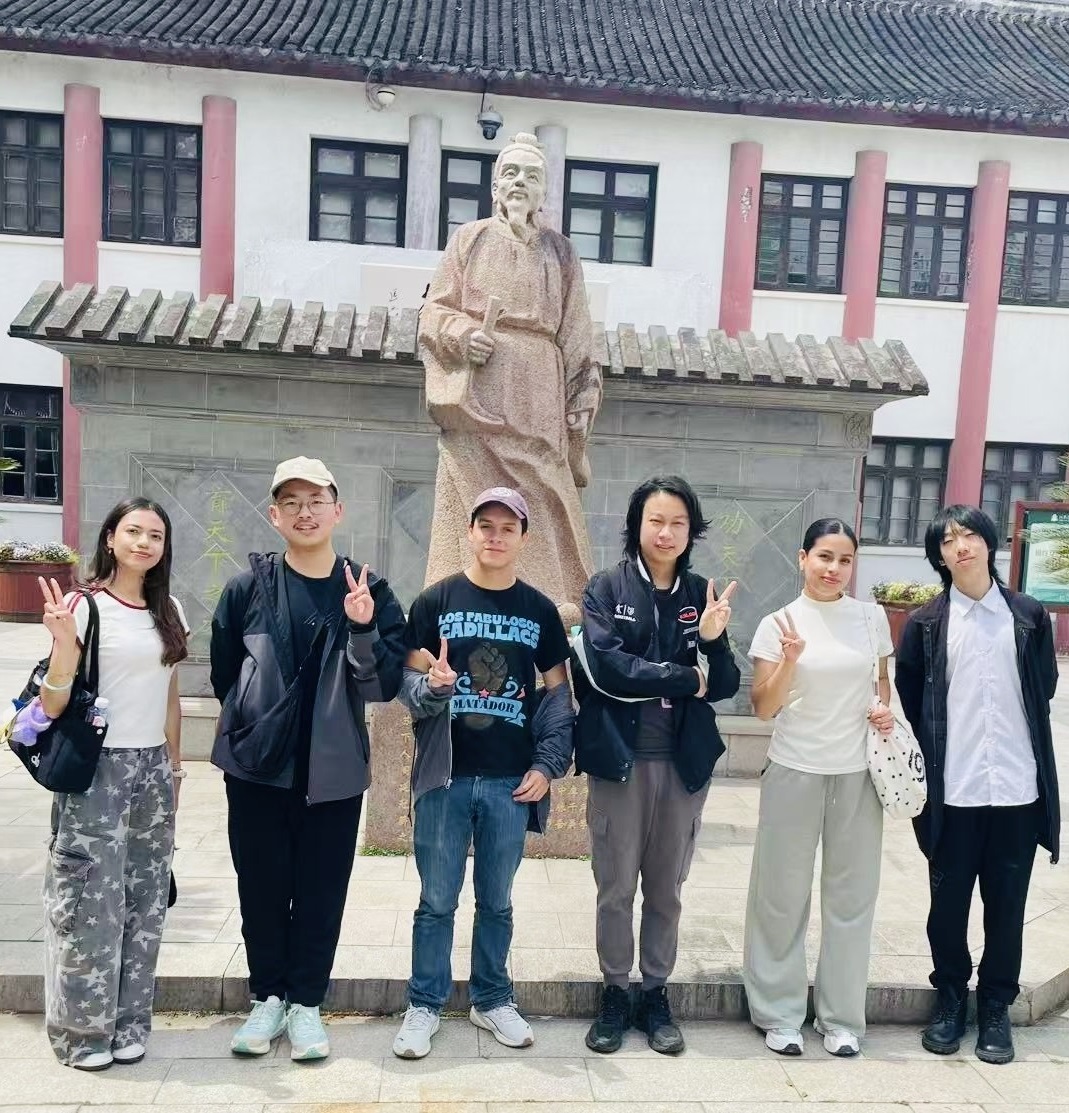
After finishing my previous interview with international students about their sense of loneliness, I began to reflect on the deeper meaning of this project. If the interviews served to document their emotions and stories, this time I hoped to do more: to help them truly immerse themselves in the culture of a city, rather than remaining confined to campus merely as international students studying in China. So, during the short Qingming Festival holiday, my club members and I took three visiting friends—Mexican international students—on a tour of my high school, Suzhou High School. Through introducing the campus and the city’s culture, we hoped to give them a more authentic understanding of Suzhou.
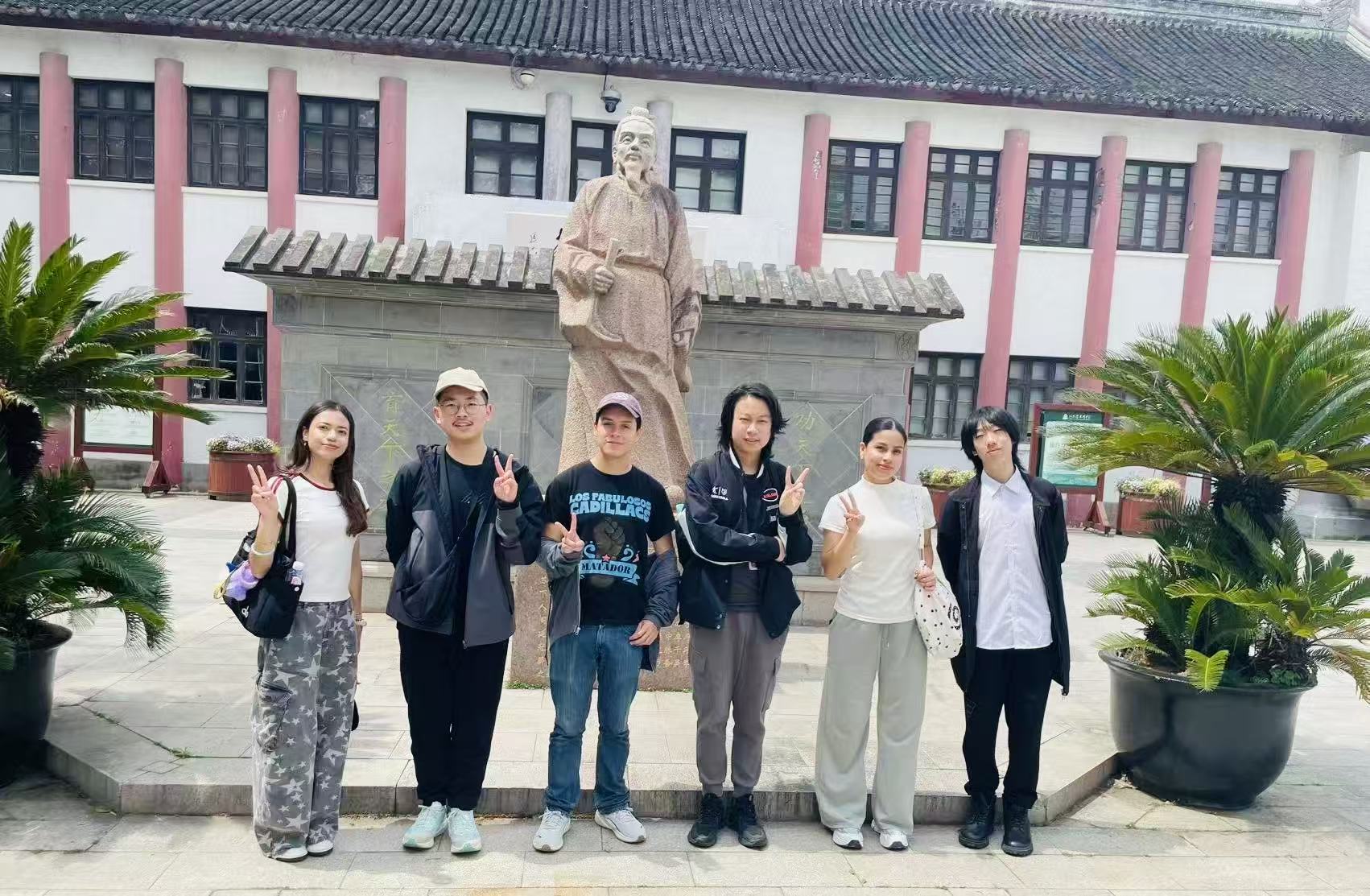
We entered through the main gate of the campus, where the iconic statue of Fan Zhongyan stood right before us. During the tour, I didn’t just describe the structure itself; I deliberately focused on its cultural and historical significance in China. I introduced “Notes on Yueyang Tower”, inscribed on the wall behind the statue, and explained the turbulent era of the Northern Song Dynasty when Fan Zhongyan lived, his grand political aspirations, and the profound meaning of the line *“Be the first to concern oneself with the state’s worries, and the last to enjoy its comforts”* in Chinese culture. They were deeply curious about how a school would honor a historical figure with a statue and take his literary spirit as an educational symbol. This sparked a lively discussion between us about the value of learning from the wisdom and virtues of ancient figures in Chinese educational culture.
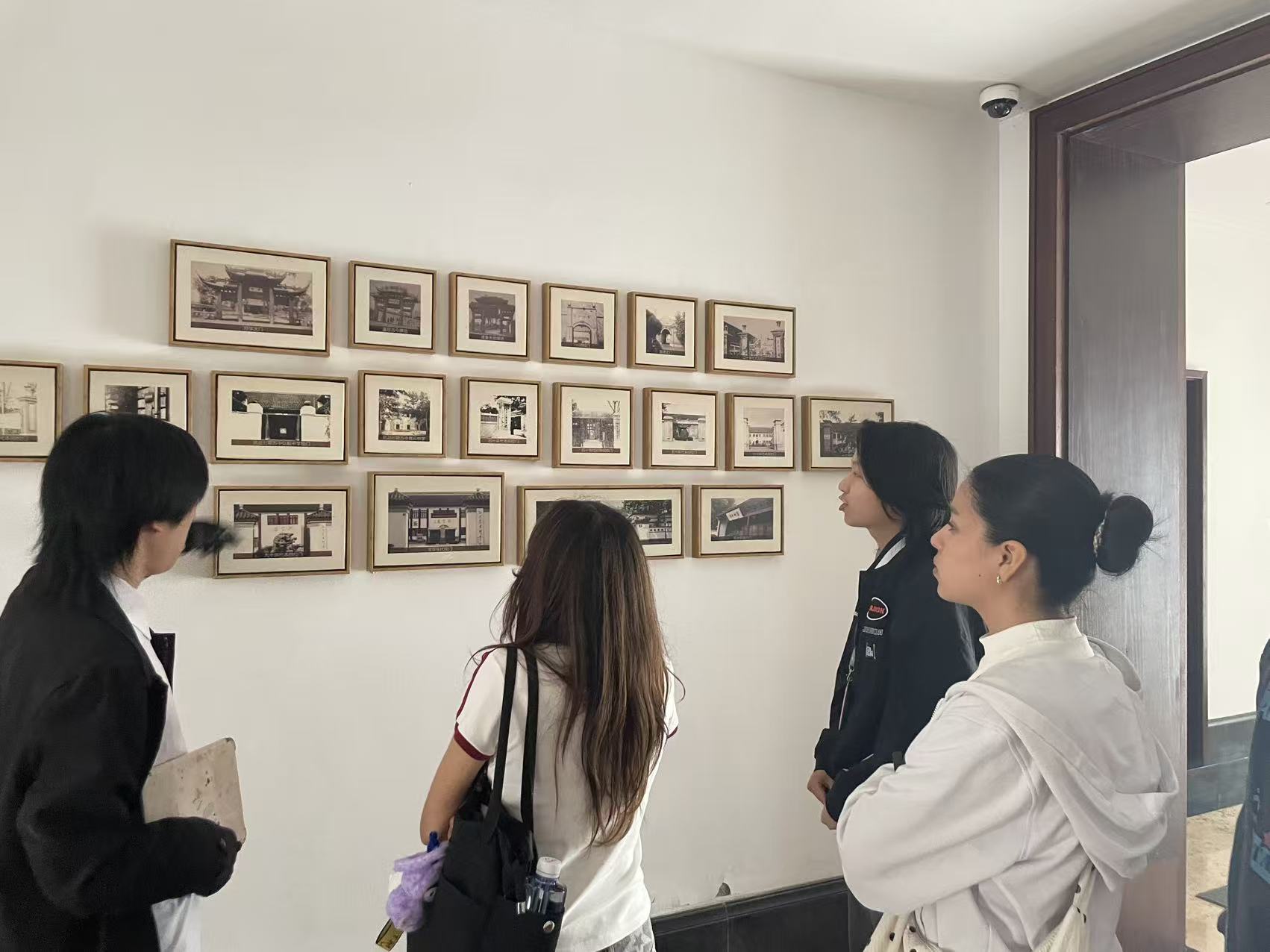
Afterwards, we showed them around the campus one by one: the Science Building, the Red Building, Ziyang Building, Daoshan Hill, Laixiu Square, and the Library. Throughout the tour, we did not merely explain the functions of these buildings; instead, we kept connecting the conversation to traditional Chinese culture and the history of the school. For instance, we talked about the origins of the building names, the tradition of ancient Chinese academy culture, and the classic “mountain, water, and garden” layout often seen in Chinese campuses.

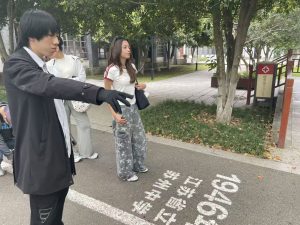
Along the main path of the campus lies a school history timeline laid out in chronological order. Here, Charles shared the development history of Suzhou High School with them, covering the evolution of education from the late Qing Dynasty through modern times to the contemporary system. This timeline not only documents the school’s growth but also, to some extent, reflects the development of modern and contemporary education in China. Later, when we walked by Yule Pond (the Pond of Fish Joy), Luke cited the classic dialogue “Zhuangzi and Huizi Debate on the Happiness of Fish” from “Zhuangzi”. Using this story, he explained the ideas in Chinese philosophy concerning subjective experience, perception, and humanity’s relationship with the world. They found it fascinating that philosophical tales were integrated into campus scenery, and thought this way of expressing culture was deeply poetic.
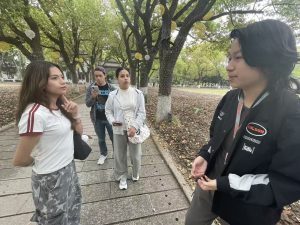

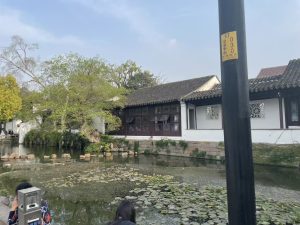
None of the three friends from Mexico had visited Suzhou before, and they were quite unfamiliar with its culture. Yet throughout the tour—with our explanations, their questions, and our ongoing conversations—they showed constant curiosity. They mentioned that previously, they had imagined Chinese cities mostly as modern metropolises like Shanghai. But Suzhou revealed another side of China: a city where history, classical gardens, schools, and humanistic traditions blend seamlessly together.
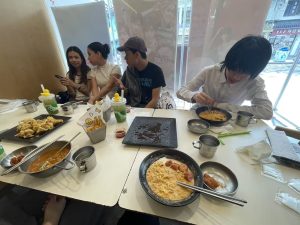
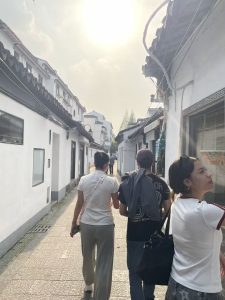
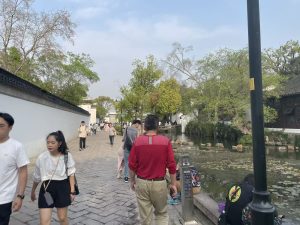
After lunch, we wandered with them through Suzhou’s ancient alleyways and visited Chai Garden, a relatively lesser-known yet highly representative classical garden. Compared with large, famous gardens, it is quieter, more down-to-earth, and closer to the garden culture embedded in Suzhou people’s daily lives. They spent a long time strolling in the garden, taking photos nonstop, and kept asking curious questions about garden design, borrowed scenery techniques, and spatial layout.
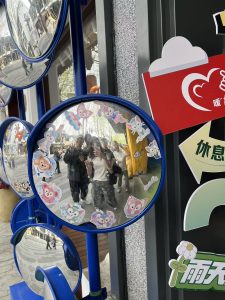
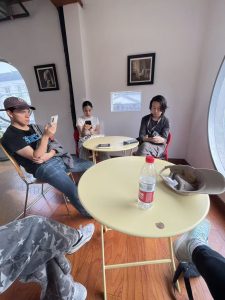
As the day drew to a close, we rested and chatted at Ironhand Coffee near Canglang Pavilion, sharing our thoughts on the day’s experiences. They said the day had truly let them feel the cultural difference between Suzhou and other modern cities like Shanghai. Shanghai strikes people as international and fast-paced, while Suzhou exudes a sense of tranquility and historical depth, making it easier to settle into life gently. They mentioned that after this day, they no longer felt like mere “international students studying in China,” nor did they feel socially isolated due to cultural gaps and unfamiliarity with the city. Instead, they were gradually integrating into life in Suzhou, gaining a deeper understanding of its culture, and in turn, better adapting to their studies and daily life as international students at Xi’an Jiaotong-Liverpool University.
 For me, this activity has also led me to rethink the significance of this project. At first, I only intended to record the loneliness and stories of international students. But now I have gradually realized that this project is not about eliminating loneliness, but about learning to ease it. Even with loneliness still there, through cultural understanding, urban exploration, and interpersonal communication, we can help them gradually find a sense of belonging and feel the warmth in an unfamiliar country.
 The warm corners of Suzhou High School Campus, along with us who are always ready to listen, hope to light more lamps. May more international students wandering in a foreign land know that there is always a warm light waiting, prepared to understand the darkness of their nights.