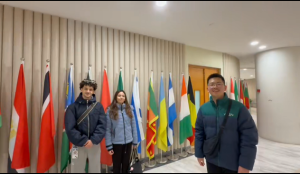
Last July, we launched our first “Echoes of Humanity – Searching for Loneliness” social interview project at Xi’an Jiaotong-Liverpool University, which received positive feedback and impact. Today, we continued our journey by interviewing some of the newly enrolled international students and two professors at Xi’an Jiaotong-Liverpool University. They come from the UK, France, Mexico, Palestine, Canada, and Australia, respectively, to explore the loneliness they experience in unfamiliar environments and how they adapt to their new academic and social lives. I gleaned valuable information and gained invaluable insights from their responses.The full interviews can be viewed in six original videos on the homepage. After interviewing 12 international students (Chinese literature, management, trade, and a professor teaching ELAS language) about their experiences studying abroad, I noticed a few patterns I’d like to share:1. Most of the 12 students interviewed were outgoing, communicative, and able to establish direct connections in English. This is a major factor in their continued openness in China.2. Most didn’t feel lonely in China because they had friends from their home countries, were open to Chinese culture, and had learned a little Chinese.3. In their home countries, they had ways to cope with loneliness: in the UK, they enjoyed drinking alcohol and beverages, similar to the situation in France; in Australia, people enjoyed playing ball sports, which aligns with some British customs. Others mentioned using social media to reduce feelings of loneliness.
4. Language barriers limited some of their social interactions: but by being extroverted and positive, they could always make friends and communicate, reducing loneliness in society and at school.
5. International students typically use their real names as their WeChat profile pictures and names, a genuine approach to socializing that actually benefits their studies and daily life.
After establishing contact information, we hope to create a “virtual community” through online group interaction and offline activities. We aim to help international students at XJTLU in Suzhou make more friends during their year-long exchange program, reduce loneliness, and better understand, connect with, and appreciate China.